
Architectural Systems
Lift and Slide Door Systems
A lift-and-slide door separates two jobs that ordinary sliders combine: sealing when closed, and moving freely when open.
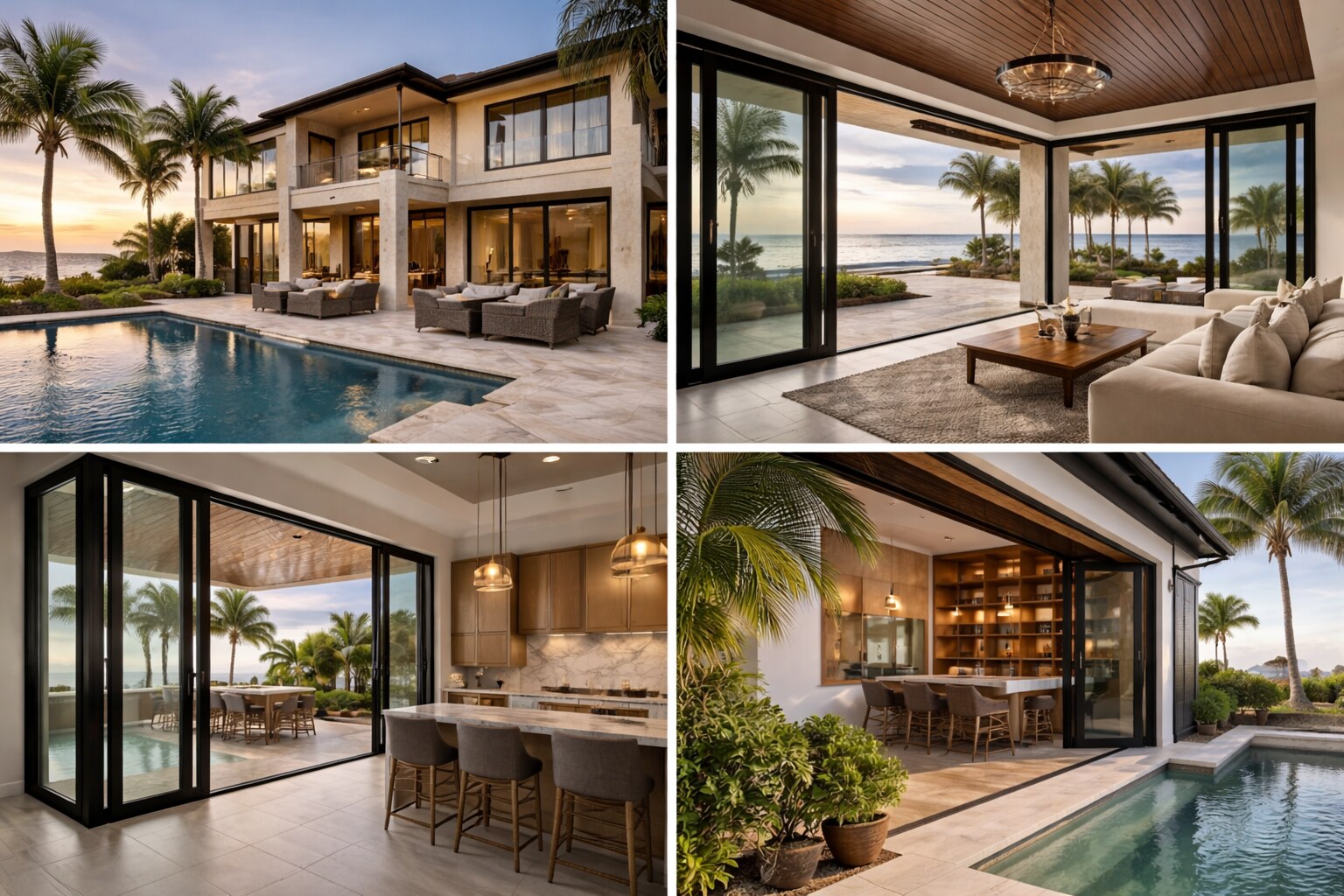
What it is
Turning the handle lifts the panel off its compression seals onto the running gear. It travels on rollers, then lowers back onto the seals when closed.
That mechanism is what allows very heavy panels to be moved by hand while maintaining a continuous sealing line when shut.
Where it is used
- —Terrace, courtyard and pool openings
- —Balcony access in residential towers
- —Hospitality thresholds and amenity spaces
- —Any opening where panel size exceeds conventional sliding capability
What it resolves
Conventional sliders compromise: seals tight enough for weather performance make the panel heavy to move.
Lift-and-slide hardware resolves that conflict, which is why it is the common choice for large-span glazed openings.
Configurations
Two-track and multi-track
Stacked panel arrangements for wider openings.
Pocket and disappearing configurations
Panels slide into a wall cavity to clear the opening entirely.
Corner openings
Two runs meeting at an unsupported corner, subject to structural coordination.
Flush threshold detailing
Level interior-to-exterior transition with drainage designed into the sill.
Specification considerations
- —Panel weight and the corresponding running gear class
- —Structural head deflection above the opening
- —Threshold drainage where a flush transition is required
- —Exposure and driving-rain conditions
- —Site access and handling for oversized glass
Standards and documentation
Air, water and structural performance depend on the specific system, panel size and configuration. Reliance requests documentation from the manufacturer for the configuration being proposed.
How Reliance supports supply
- —Opening-by-opening system matching
- —Hardware duty confirmation against panel weight
- —Inspection and protective packing for oversized glazed panels
- —Delivery sequencing coordinated with the installation programme